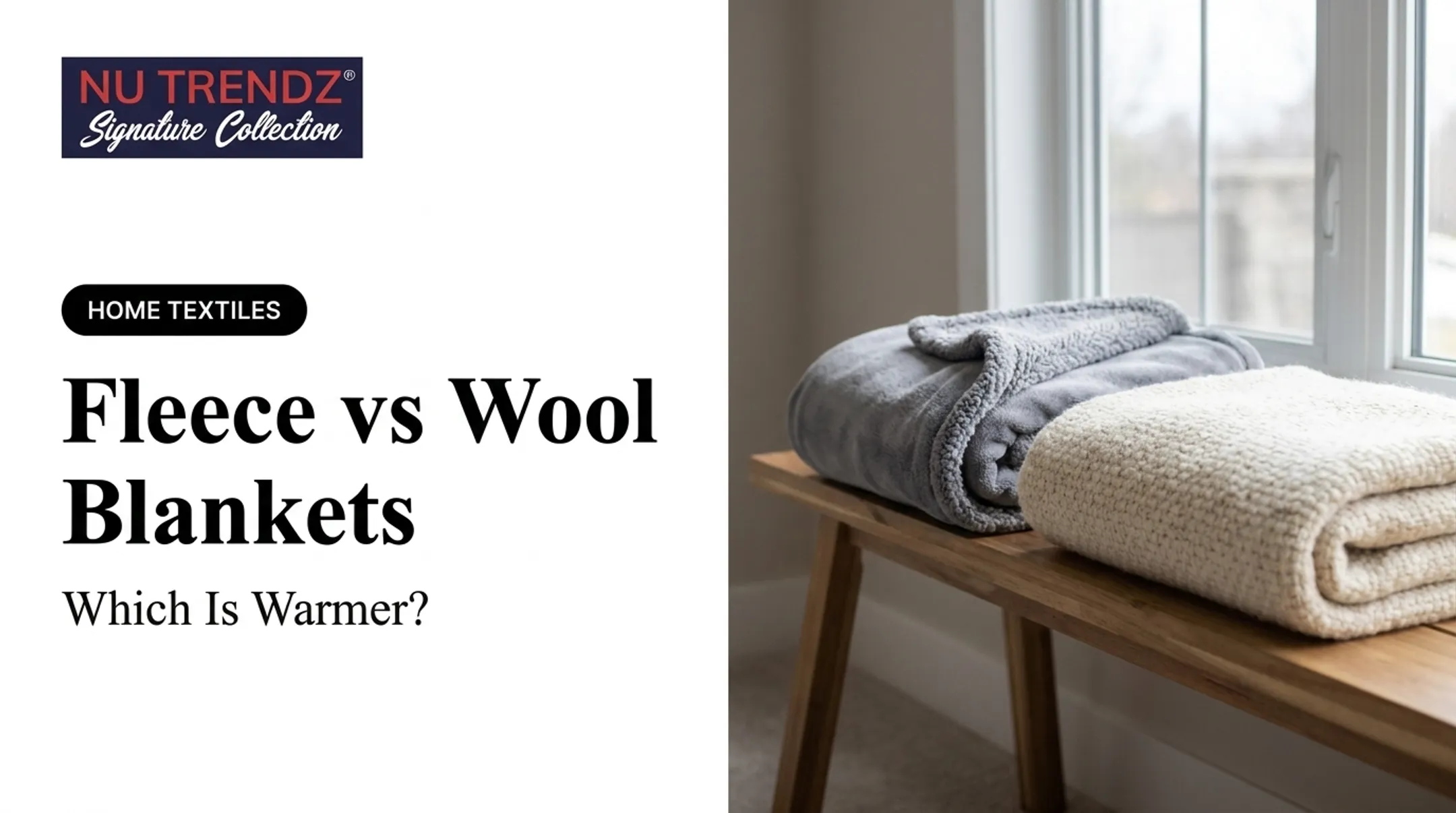

That difference matters more than most shoppers realize. It affects how warm you'll be, how heavy the blanket feels on the couch, how it holds up in the wash, and — if you're shopping for a printed or licensed design — how crisp that artwork actually looks. A 2023 market snapshot from Grand View Research puts the global blanket market at $15.1 billion, projected to hit $25.5 billion by 2030. People are buying a lot of blankets. Knowing which type suits your space is worth five minutes of reading.
Key Takeaways
- Sherpa is a high-pile, wool-mimicking fleece built for plushness and heat retention.
- Fleece is a broader category spanning ultra-light microfleece to heavy polar fleece.
- Sherpa wins for maximum warmth and cocoon-like texture; fleece wins for breathability and everyday versatility.
- Smooth fleece typically prints sharper artwork; sherpa prioritizes loft and touch over image clarity.
- Your ideal pick depends on room temperature, care habits, and budget — not just the fabric name.
Sherpa vs. Fleece: Quick Comparison
Cost
Sherpa pricing swings with pile height, backing, size, and customization. Fleece follows the same pattern: a thin microfleece throw can be a budget buy, while heavyweight polar fleece with anti-pilling treatment can cost as much as sherpa.
Composition and Texture
- Sherpa: Fluffy, wool-like, high-pile surface, commonly made from 100% polyester designed to imitate shearling.
- Fleece: A broader synthetic fabric family that ranges from brushed and smooth to low-pile microfleece or heavier polar fleece.
Manufacturer Polartec groups standard fleece into weight tiers: Micro, 100, 200, and 300, which shows fleece is a range of textures, not one fabric.

Warmth and Breathability
Loft traps air, and trapped air insulates. That loft is why sherpa feels so cozy. According to Polartec's High Loft fabric research, raised pile creates thermal air pockets while still letting moisture escape. Warm and breathable can coexist, but a thin sherpa throw will not automatically beat heavyweight polar fleece.
- Sherpa: Warmer feel from loft, but can overheat in warm rooms.
- Fleece: Warmth scales with thickness; lighter weights breathe more easily.
Weight and Everyday Versatility
Thickness changes how each fabric fits daily life:
- Sherpa: Thicker and bulkier; ideal for a movie-night cocoon, less ideal in a suitcase
- Fleece: Packs down easily, layers well, and suits daily use without filling a closet or bag
Durability and Care
High-pile fabrics carry real care risks. Rumpl's own Sherpa Fleece care instructions call for cold, front-loading washing and low or no heat when drying. High heat can flatten or even melt the pile.
Standard fleece is generally more forgiving, though pilling, static, and fading still depend on fiber quality. Always check the care label rather than assuming based on the fabric name.
Printing and Appearance
- Sherpa: Textured pile gives a softer, less crisp visual result — chosen for feel over fine detail.
- Fleece: A smoother face supports sharper logos, photos, and vibrant patterns.

What Is a Sherpa Blanket?
Sherpa blankets use a fluffy, high-pile fabric engineered to resemble shearling or wool, though exact construction varies by manufacturer. Loft, pile height, and layering all shape how warm, soft, and heavy the finished blanket feels.
Benefits:
- Plush, wool-like hand feel
- Strong heat retention for cold rooms
- Cozy, premium appearance
- Ideal for stationary lounging
Limitations:
- Can overheat in warm environments
- Bulkier than standard fleece
- Pile can flatten or mat with rough washing or high heat
- More prone to static buildup
Use Cases of Sherpa
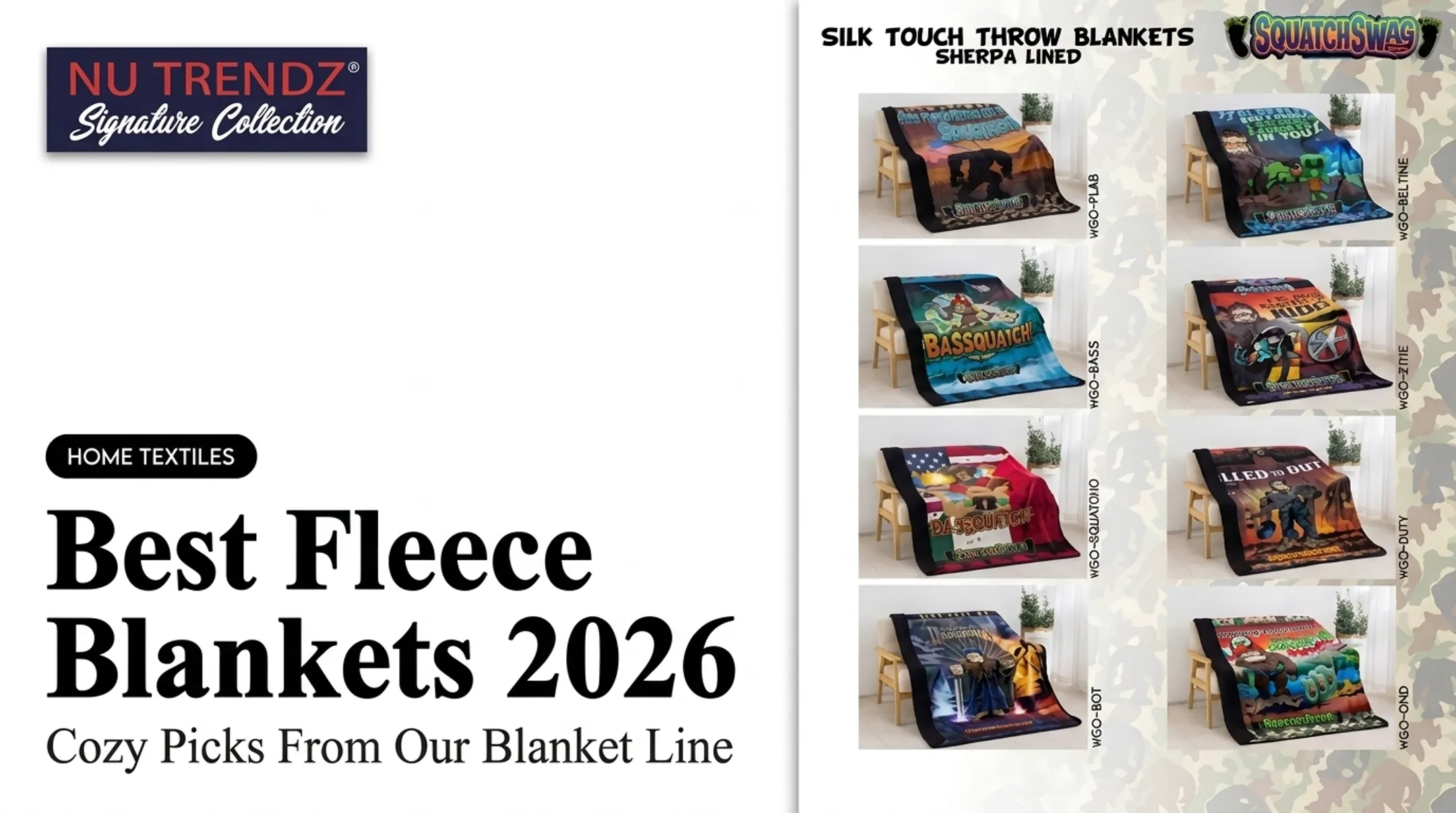
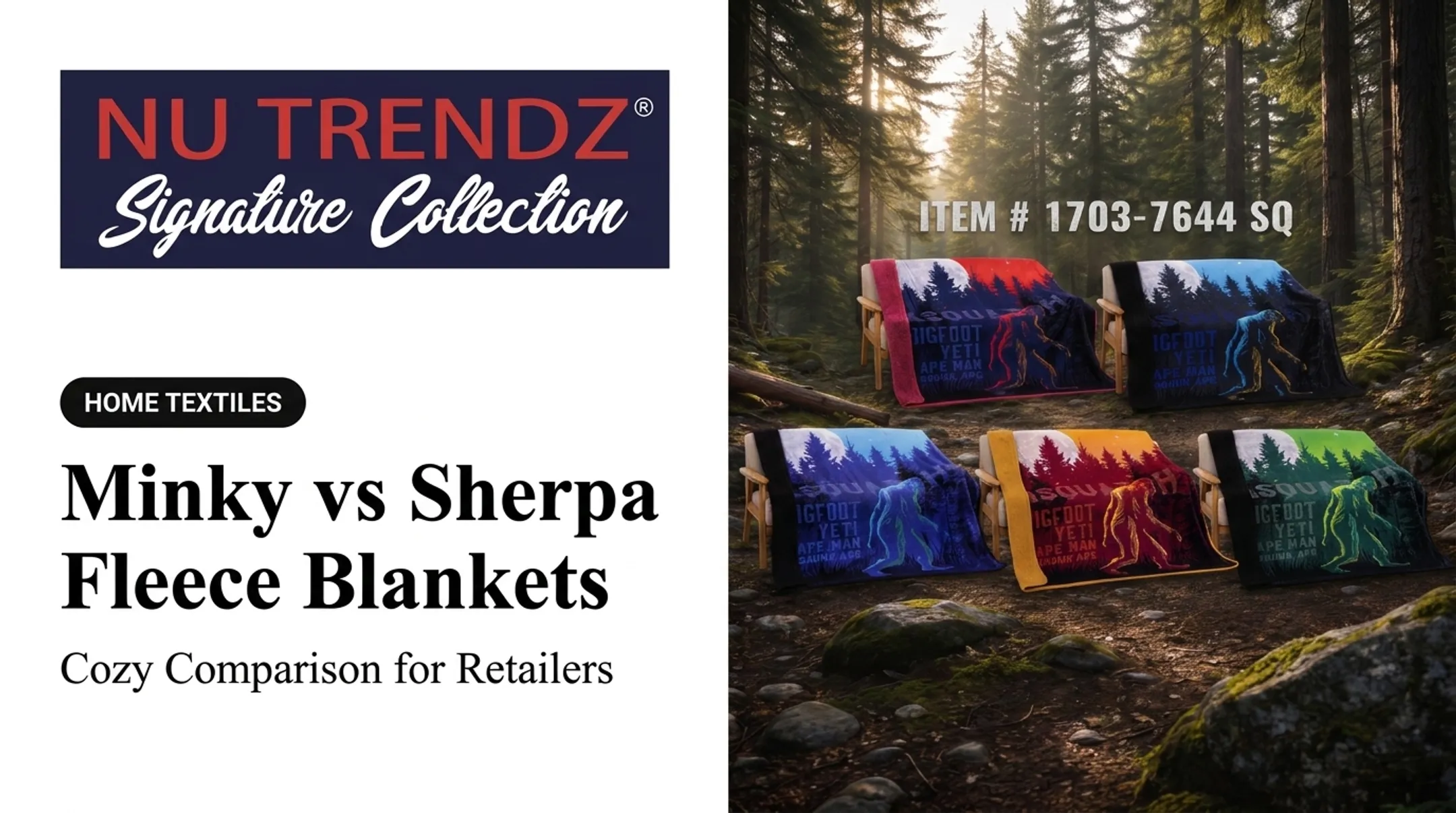
Sherpa shines in cold bedrooms, winter movie nights, and as a premium gift. Silicon Valley Textiles uses it as the lining on its Sasquatch-themed throws, including the 50x60-inch Signature Sherpa Lined Throw Blanket with Bigfoot silhouettes and playful "SQUATCH," "YETI," and "APE MAN" graphics.

Those throws are built for tactile comfort at home, not for travel. Skip sherpa in warm climates, heated apartments, or if you're always on the move. When portability and a smooth surface matter more than plushness, choose fleece instead.
What Is a Fleece Blanket?
Fleece is a category of fabrics spanning multiple weights and finishes. Lightweight microfleece feels almost paper-thin and breathable; midweight fleece balances warmth and drape; heavier polar fleece adds bulk and insulation closer to sherpa territory.
Benefits:
- Lightweight and easy to handle
- Breathes better than thick pile fabrics
- Dries quickly
- Works year-round
Drawbacks:
- Lightweight versions offer less insulation
- Pilling and static vary by fiber quality
- Softness and durability differ between brands
Use Cases of Fleece
Fleece fits air-conditioned rooms, travel bags, kids' blankets, and layering on cool nights. One documented example is a 200 g/m² (about 6 oz/yd²) anti-pilling polar fleece made for dye-sublimation printing, showing moderate-weight fleece holds detailed custom artwork well.
That's why fleece often wins for sports themes, entertainment graphics, and personalized gifts where the design needs to pop.
Sherpa vs. Fleece: What Is Better in Real Life?
What to Weigh Before You Buy
Match the blanket to how you actually live with it:
- Room temperature and your usual thermostat setting
- How much bulk you want to store or travel with
- How often you'll wash it, and what your laundry setup allows
- Whether print clarity matters (photo, logo, or licensed artwork)
Fabric name alone doesn't guarantee quality. Before you buy, check fiber content, dimensions, pile or weight, backing, stitching, and care instructions.
Situational Recommendations
- Choose sherpa when plush, cocoon-like feel matters more than packing light
- Choose fleece when you want lightweight comfort, breathability, and easy washing
- Compare specs, not names when warmth decides it — thick polar fleece can beat a thin sherpa throw

Real-World Example
Rumpl separates care instructions by construction: its Sherpa Fleece line requires gentle, low-heat handling, while its standard Fleece Puffy blanket tolerates a wider range of washing and drying methods. The takeaway: ask what the specific blanket's label says, not what the general fabric name implies.
If you care as much about the design as the hand-feel, themed and custom options change the calculus. Silicon Valley Textiles offers sherpa-lined and fleece-style throws with sports, novelty, and Sasquatch artwork, so you can pair the fabric choice above with a print people actually want to keep.
Custom Blanket and Gifting Considerations
Smooth fleece generally suits detailed photos, team logos, and entertainment graphics better than high-pile sherpa. But when the gift's whole appeal is "wrap yourself in this and don't move," sherpa often wins regardless of print sharpness.
Before ordering a custom piece:
- Confirm which fabric side gets printed
- Ask about color accuracy expectations
- Check washing instructions after printing
- Request a design preview if one is available
Conclusion
Sherpa generally wins on warmth and plush texture. Fleece generally wins on versatility, breathability, easy care, and print clarity.
Neither fabric is universally better. Match the blanket to where it lives, how you’ll use it, and whether warmth or portability matters more:
- Choose sherpa for cold nights, couch lounging, and maximum plush feel
- Choose fleece for travel, layering, easy washing, and sharp printed designs
Frequently Asked Questions
Which is warmer, sherpa or fleece?
Sherpa is usually warmer thanks to its loft and trapped-air insulation. That said, a heavyweight polar fleece can rival or beat a thin, lightweight sherpa blanket, so check actual product specs.
Are sherpa blankets worth it?
Sherpa is worth it when plushness, warmth, and a premium feel are top priorities, especially for cold rooms or gifting. If you need something lightweight, packable, or budget-friendly, fleece may offer better value.
Can sherpa blankets go in the dryer?
Follow the care label — most sherpa blankets tolerate only low or no heat. High heat can flatten, melt, or mat the pile, so avoid your dryer's standard cycle unless the label specifically allows it.
What is the main difference between sherpa and fleece blankets?
Sherpa is a high-pile, fluffy fleece style built to mimic wool. Fleece is a broader category that includes sherpa along with lighter microfleece and heavier polar fleece variations.
Which is better for custom blanket printing, sherpa or fleece?
Smooth fleece generally supports sharper, more detailed printed designs since its flat surface holds ink and dye better. Sherpa is preferable when tactile softness and warmth outweigh maximum image clarity.