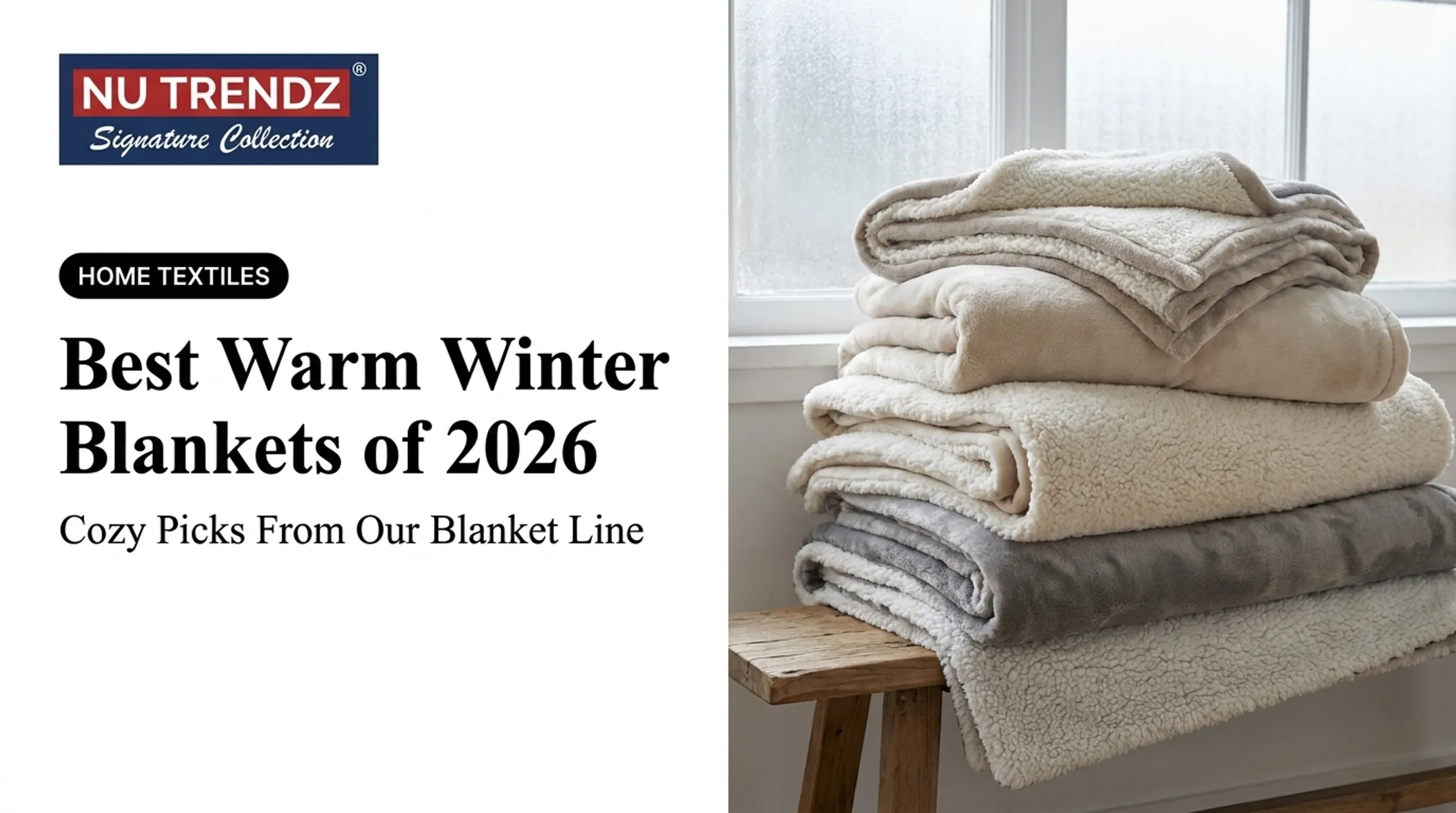

Choosing wrong isn't just uncomfortable. Fleece can lose much of its insulating power the moment it gets damp, while wool comes with a higher price tag and pickier care instructions. This guide breaks down warmth, comfort, durability, and cost, so you can match the right blanket to your climate and lifestyle.
Key Takeaways
- Wool insulates even when damp, making it the top pick for extreme cold, camping, or humid climates
- Fleece is lighter, cheaper, and easier to wash, but loses warmth fast when wet
- Thickness (GSM) and construction matter as much as fiber type for actual warmth
- Climate, moisture, and care needs should drive your choice, not warmth alone
- Keep both on hand if you want flexibility across seasons and conditions
Fleece vs Wool: Quick Comparison
| Factor | Fleece | Wool |
|---|---|---|
| Cost | Budget-friendly, mass-produced | Higher upfront cost, natural sourcing |
| Composition | Synthetic polyester fibers | Natural sheep fiber, often merino |
| Warmth | Good, drops sharply when wet | Excellent, retains heat even damp |
| Durability | Prone to pilling, shorter lifespan | Long-lasting with proper care |
| Maintenance | Machine washable, quick dry | Often hand wash or dry clean only |

Real-world pricing backs this up. A 100% polyester fleece bed blanket from Lands' End runs $89.95–$149.95, while Pendleton's wool blankets list at $325–$550. Entry-level virgin wool, like Arcturus, can actually undercut premium fleece at $57.99–$84.99. Don't assume wool is always the pricier option.
What Is a Fleece Blanket?
Fleece is a knitted synthetic fabric, usually polyester, engineered to mimic wool's warmth without the weight or cost. Its raised pile traps air pockets close to the fabric surface, which is where the warmth comes from.
Core benefits:
- Lightweight insulation without bulk
- Soft to the touch, especially anti-pill varieties
- Affordable compared to natural fibers
- Machine washable in most cases
Fleece isn't one-size-fits-all. Polartec, one of the category's biggest names, breaks fleece into weight classes:
- Micro for layering
- 100 for light warmth
- 200 for mid-weight cold protection
- 300 for heavy insulation
Commercial fleece typically runs about 100 to 450+ GSM (grams per square meter), depending on the intended use.

Use Cases of Fleece
Fleece shines in everyday indoor settings: couch throws, kids' rooms, travel blankets, and dorm rooms. It's the practical choice for mild-to-moderate winters where you're not battling extreme cold or wet conditions.
Demand for the category keeps climbing. Polyester remains the world's most widely used fiber—more than half of global fiber-market volume—with production rising from roughly 71 million tons in 2023 to about 78 million tons in 2024. Home furnishings, including blankets, are a major driver of that demand.
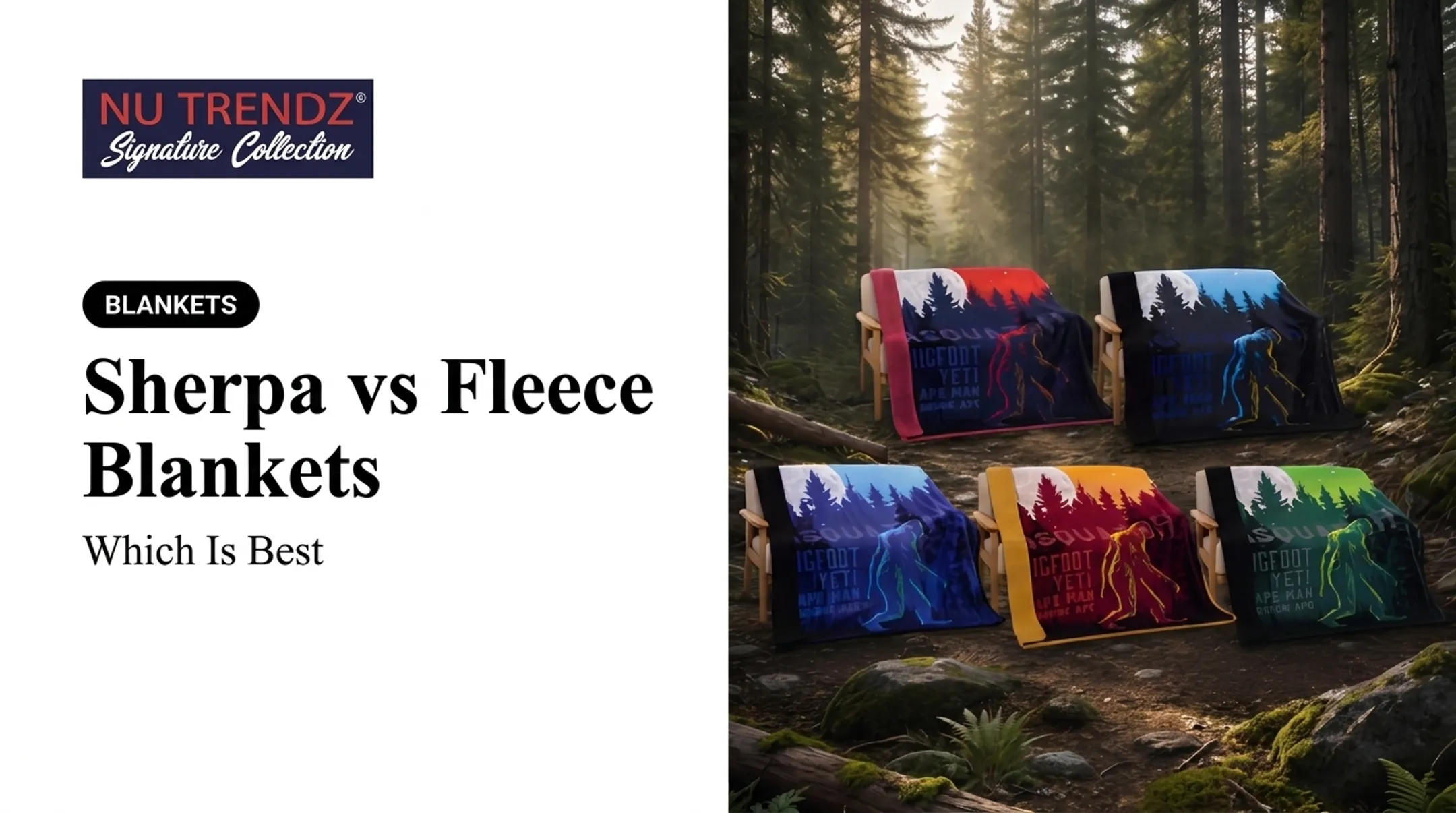
This is also where a lot of licensed and novelty blankets live. Silicon Valley Textiles' Sherpa-lined throws, including its Sasquatch/Bigfoot novelty line, fall into this soft, synthetic-comfort category that prioritizes everyday coziness over extreme-weather performance.
What Is a Wool Blanket?
Wool is a natural protein fiber from sheep, known for thermal regulation and moisture-wicking. Unlike fleece, it doesn't just trap air—it manages moisture vapor, so it still feels warm in damp conditions.
Core benefits:
- Superior insulation relative to weight
- Natural temperature regulation across seasons
- Antimicrobial and naturally odor-resistant
- Hypoallergenic properties in many finer grades
Merino is the softer, more breathable subtype most people mean when they want wool that resists odor buildup after repeated use.
Where Wool Blankets Excel
Wool blankets earn their reputation in extreme cold: winter camping, emergency kits, and military-grade gear. Coleman Surplus and Arcturus both sell 100% wool blankets specifically marketed for cold nights and field conditions, with some military-style specs weighing in around 4.5 lbs and 550 GSM.
The science backs that reputation: wool can absorb up to 35% of its weight in moisture before it feels wet, and that absorption releases heat.

That edge matters if you sleep outdoors or in humid conditions where condensation is a real concern.
Fleece vs Wool: Which Is Warmer?
There's no single lab test comparing wool and fleece blankets under identical conditions, so treat blanket-wide "winner" claims with some skepticism. Here’s what holds up in practice:
- Climate severity matters most. Freezing, damp, or unpredictable weather favors wool; mild, dry indoor use favors fleece.
- Moisture exposure is the tiebreaker. Fleece loses much of its insulating value when wet; wool keeps working.
- Warmth without bulk. Fleece stays light for travel, couch use, and easy layering.
- Thickness matters as much as material. A 300 GSM fleece can beat a lighter fleece from the same line, but GSM isn’t destiny—one test of ten fleeces ranked the thinnest sample second for warmth.
Practical pick: Choose wool for freezing temps, damp conditions, or overnight camping. Choose fleece for everyday comfort, milder climates, and low-maintenance living.
If you're shopping for a themed or gift blanket rather than a technical cold-weather piece, style often matters as much as fiber science. Silicon Valley Textiles offers licensed sports blankets and custom textile designs, so you can pick a personalized or fandom-driven blanket without giving up everyday comfort.
Durability, Care, and Environmental Impact
Wool's reputation for longevity is well earned, even without a study that pins an exact year advantage over fleece. The practical gaps show up in lifespan under regular use, care needs, and end-of-life impact:
- With regular use and proper care, wool blankets often last for decades; fleece is more prone to pilling and thinning over time
- Wool needs a gentle cold wash, dried flat, and never machine-dried; fleece is easier to launder but can lose loft in high dryer heat
- Woolmark testing found 100% Merino fabric biodegraded 95% after 15 weeks in soil, while conventional polyester from fossil fuels does not break down the same way
- Polyester textiles can release hundreds of thousands of microfibers per wash cycle—an environmental cost natural wool does not carry

Neither fiber is impact-free. Wool production has its own footprint, and biodegradable doesn't mean zero environmental cost, but it does give wool an edge at end-of-life.
Conclusion
There's no universal winner. Each fabric leads in different areas:
- Wool: Raw warmth, moisture resistance, and long-term durability
- Fleece: Comfort, affordability, and easy care
Let climate, moisture exposure, and how much care you'll put in guide the choice—not warmth alone. Plenty of households keep both: fleece for everyday use, wool for deep winter or camping.
Frequently Asked Questions
Which is better, a wool blanket or a fleece blanket?
Wool wins for extreme cold, durability, and moisture resistance. Fleece wins on softness, affordability, and easy care for everyday use.
What is the warmest type of blanket for winter?
Wool is the warmest option for winter thanks to its natural insulating and moisture-wicking properties. A thick, heavy fleece can still perform well for indoor use.
Is a wool blanket too hot for summer?
Not necessarily. Wool is naturally breathable and temperature-regulating, so a lighter-weight wool blanket can work year-round. Fleece, on the other hand, tends to trap heat and isn't ideal for summer.
Is fleece or wool warmer when wet?
Wool wins here. It retains much of its insulating ability even when damp, absorbing up to 35% of its weight in moisture before feeling wet. Fleece loses a significant amount of warmth once soaked.
Which blanket lasts longer, fleece or wool?
Wool typically outlasts fleece by years when cared for properly. Fleece tends to pill and thin out with repeated washing and everyday use.
Can I use both fleece and wool blankets together?
Absolutely. Many people layer or rotate seasonally, using fleece for mild months and wool for the depths of winter.