
Many shoppers struggle with this exact question. A product can display a familiar team, character, or entertainment design without any authorization from the rights holder behind it. This guide breaks down what "officially licensed" really means, how the approval process works, and practical ways to check authenticity before you buy in the US.
We'll also draw the line between officially licensed merchandise, generic themed products, fan-made items, counterfeits, and custom designs, with examples relevant to blankets, apparel, and accessories.
Key Takeaways
- Confirm official licensed merchandise is sold under a formal agreement with the rights holder
- Expect licenses to be limited by product category, territory, time period, or sales channel
- Verify the seller, listing details, and licensing marks instead of judging by appearance alone
- Treat custom or personalized products as unlicensed unless brand rights have separate authorization
What Does "Officially Licensed" Mean?
What a License Authorizes
An officially licensed product uses a protected name, logo, character, image, slogan, or team identity with permission from the rights holder. According to Licensing International, a license is an agreement where a licensee leases rights to legally protected intellectual property from a licensor.
Three roles matter here:
- Licensor – owns or represents the IP and guides how it appears on products, packaging, and marketing
- Licensee – takes on financial obligations, submits products for approval, and meets agreed standards
- Retailer – sells the finished, authorized product to consumers
Licensing agreements typically involve fees, royalties, and product standards, but the exact commercial terms vary by contract. There's no single universal formula.
How the Licensing Relationship Works
The process moves through several stages:
- Application and negotiation – the prospective licensee applies for rights and agrees on terms
- Design submission – artwork, colors, and placement go to the rights holder for review
- Sample review – rights holders check prototypes against brand standards
- Production and distribution – approved designs move into manufacturing
- Royalty reporting – ongoing payments track back to the licensor
An approval for one product category doesn't carry over automatically. A logo cleared for apparel isn't necessarily cleared for drinkware or home goods. Each category typically needs its own sign-off.

Licensing Is Permission, Not a Quality Guarantee
Licensing confirms authorized use of intellectual property. It doesn't guarantee fabric quality, print durability, or safe materials. Shoppers should still assess construction, care instructions, and return policies separately from licensing status.
Types and Examples of Licensed Products
Common Product Categories
Licensed merchandise spans far more than t-shirts. Common categories include:
- Apparel, jerseys, and pullovers
- Blankets, throws, and bedding
- Bags, drinkware, and jewelry
- Socks, towels, and accessories
- Home goods and collectibles
Fans use these for game day and home—jerseys and pullovers on the go, blankets and bedding on the couch.
Licensed, Generic, Fan-Made, and Custom Compared
Product category and licensing status are not the same thing. Shoppers often mix up these four types:
| Type | What It Means |
|---|---|
| Licensed | Uses authorized IP under a formal agreement |
| Generic | Uses original or non-protected themes |
| Fan-made | Independently created, often without formal authorization |
| Custom | Built around a customer's own requested design |
A product can be well-made and appealing without being officially licensed. That's not automatically a problem. But unauthorized use of protected designs, like a team logo slapped on a blanket without permission, raises legal and ethical concerns that licensed products avoid entirely.

Product Examples Shoppers May Encounter
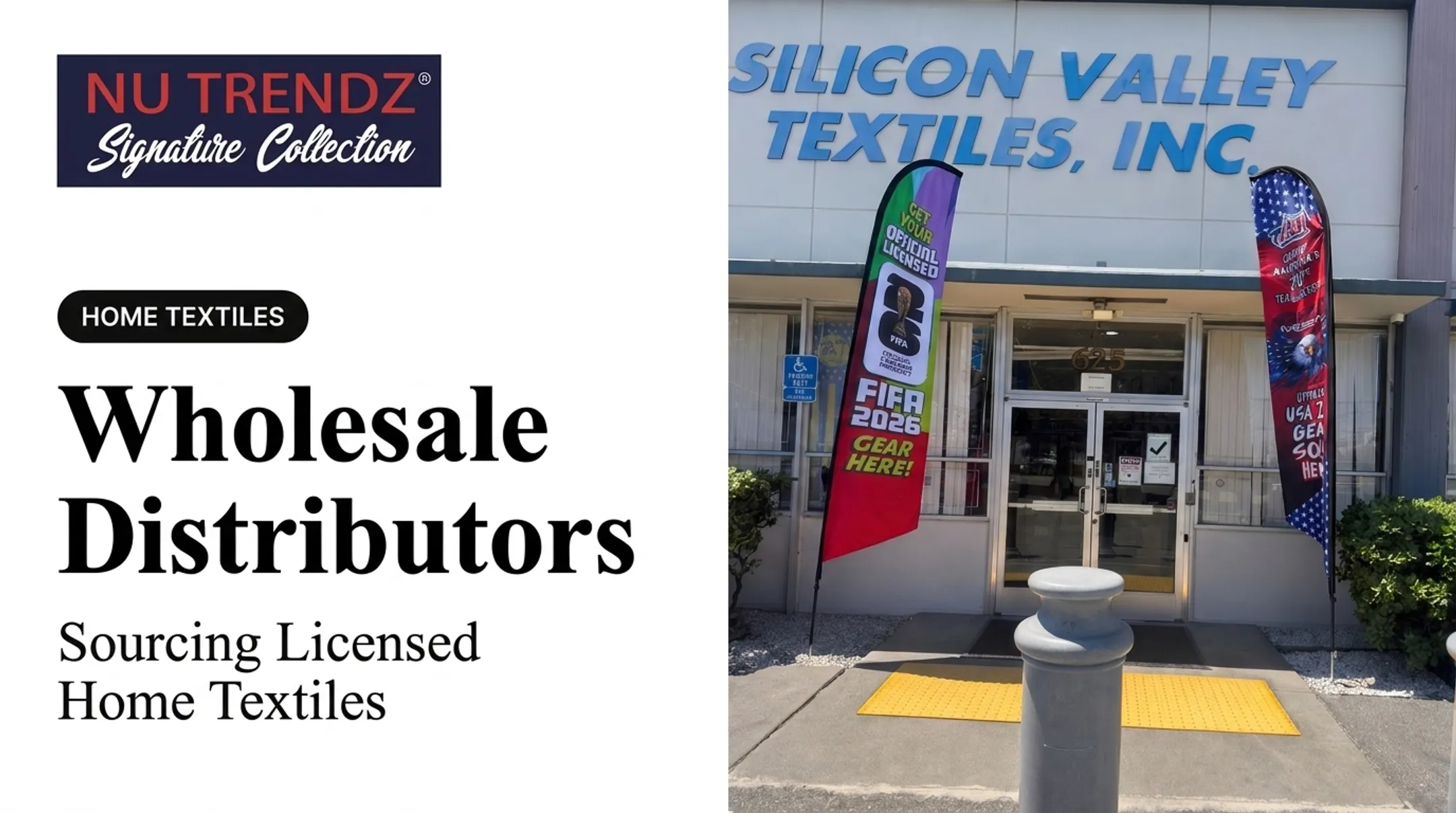
Examples shoppers run into include team-themed apparel, entertainment blankets, artist-licensed signature textiles, and soccer accessories tied to national teams. Silicon Valley Textiles, for instance, carries FIFA-themed bed sheets and NFL-licensed blankets in its Signature Collection.
Before assuming a specific brand or franchise is licensed, confirm the actual product category and current licensing status directly with the seller or manufacturer.
How to Check Whether Merchandise Is Officially Licensed
Inspect the Product and Packaging
Look for copyright or trademark information, official licensing language, and manufacturer details. Check hangtags, sewn-in labels, and any authentication features.
One caveat: authentication marks vary by rights holder and product type. The absence of one specific sticker doesn't automatically mean an item is counterfeit—but investigate before you buy.
Under FTC textile labeling requirements, most covered textile products need conspicuous fiber content, country of origin, and manufacturer or RN information. Use this label as a consistency check against the listing.
Check the Seller and Distribution Channel
Compare the seller against:
- The rights holder's official website
- An authorized retailer list
- Team or university stores
- Licensee directories, where available
An identifiable manufacturer with a complete product listing tells you more than an anonymous marketplace seller with vague descriptions.

Review the Listing for Specific Information
A trustworthy listing should clearly identify:
- The licensed property
- Product category
- Manufacturer
- Any relevant partnership language
Be wary of vague phrases like "inspired by," "official style," or "fan design" when you expect genuine licensed merchandise—those phrases are often a tell.
Treat Price and Quality as Warning Signs, Not Proof
Unusually low prices, misspelled team names, distorted logos, or peeling graphics justify a second look. However, price and visual quality alone can't conclusively prove or disprove licensing status. A legitimate discount retailer can sell authentic goods cheaply; a well-made counterfeit can still fool the eye.
Verify Uncertain Claims Before Purchasing
When in doubt, contact the rights holder or the seller directly. Save your product description, seller information, and receipt. If you need to request a refund or report suspected counterfeit merchandise later, that documentation matters.
Buying through authorized licensees and known wholesale or retail channels—such as Silicon Valley Textiles for official sports and themed home textiles—reduces the guesswork before you ever place an order.
Why Official Licensing Matters to Fans, Creators, and Brands
Official licensing affects what fans can trust, what creators and teams earn, and how brands protect their identity. Those stakes show up in four practical ways.
Supporting rights holders. Authorized purchases contribute to the commercial ecosystem the licensor and licensee built together. Payment and royalty structures depend entirely on the specific agreement, so avoid assuming a fixed percentage goes to any creator or team.
Quality control and brand protection. Rights holders often set standards for artwork, color accuracy, materials, and safety. That said, licensing oversight doesn't replace your own judgment about construction and care requirements.
Identity, fandom, and collecting. Apparel, blankets, and home textiles let fans express their interests and connect with a broader community. Artist-led or event-related merchandise carries genuine emotional and collecting value, whether or not it's technically "rare."
Risks of unauthorized merchandise. CBP's FY2025 enforcement data recorded over 1.4 million seized wearing-apparel items with a genuine-equivalent MSRP topping $156 million. That's a snapshot of enforcement activity, not a market-wide estimate, but it shows apparel is a real target for counterfeiters.

Unauthorized merchandise can also mean:
- Misleading product descriptions
- Poor durability or unsafe materials
- Lost support for the rights holder
- Misuse of protected designs
How to Choose Licensed Textile Merchandise
Match the Product to Its Use
Before ordering, decide the job: decorative blanket, everyday apparel, game-day accessory, or gift. Match the product to that use, then verify:
- Size, fabric, construction, and care instructions
- Color and dimensions
- Print method
- Return policy before checkout
Explore Licensed and Themed Textile Options
Silicon Valley Textiles, a San Jose-based textile supplier, stocks blankets, apparel, accessories, jewelry, and socks across sports, entertainment, soccer, Bigfoot, and patriotic collections. Licensed and themed lines include:
- NU TRENDZ Signature Collection: artist-licensed blankets and NFL-licensed throws
- FIFA-themed bed sheets tied to major soccer tournaments
- Sasquatch/Bigfoot novelty line: sherpa-lined 50×60-inch throws and pullovers in S–2XL (theme-driven, not a third-party license)
Understand Where Custom Products Fit
Silicon Valley Textiles also offers personalized blankets, towels, pillows, bags, drinkware, and apparel with custom printing. A custom design is not automatically officially licensed. If your order includes a protected logo or character, you still need separate rights clearance.
Browse the licensed and themed collections, or contact sales@siliconvalleytextiles.com with questions on product options and rights requirements.
Frequently Asked Questions
What is an official licensed product?
An official licensed product is merchandise that uses protected intellectual property—such as a logo, character, or team identity—under a formal agreement with the rights holder. Generic or unauthorized items may look similar but lack that permission.
How do I know if something is officially licensed?
Look for licensing marks or holograms on the label, clear rights-holder language on the listing, and packaging that names the official licensor. If those details are missing or vague, treat the item as unverified until you confirm it.
What are some examples of licensed products?
Common examples include licensed sports blankets, team apparel and jerseys, entertainment-themed home textiles, artist-approved signature blankets, soccer and national-team accessories, and character-based home goods.
Can a custom product also be officially licensed?
Yes, but customization and licensing are separate issues. If a custom design uses a protected name, logo, or character, permission from the rights holder is still required.
How can I verify a seller's licensing claim before buying?
Ask the seller for licensee or authorization details, then cross-check that name on the rights holder’s official retailer or licensee list. If you still can’t confirm it, contact the rights holder before you buy.