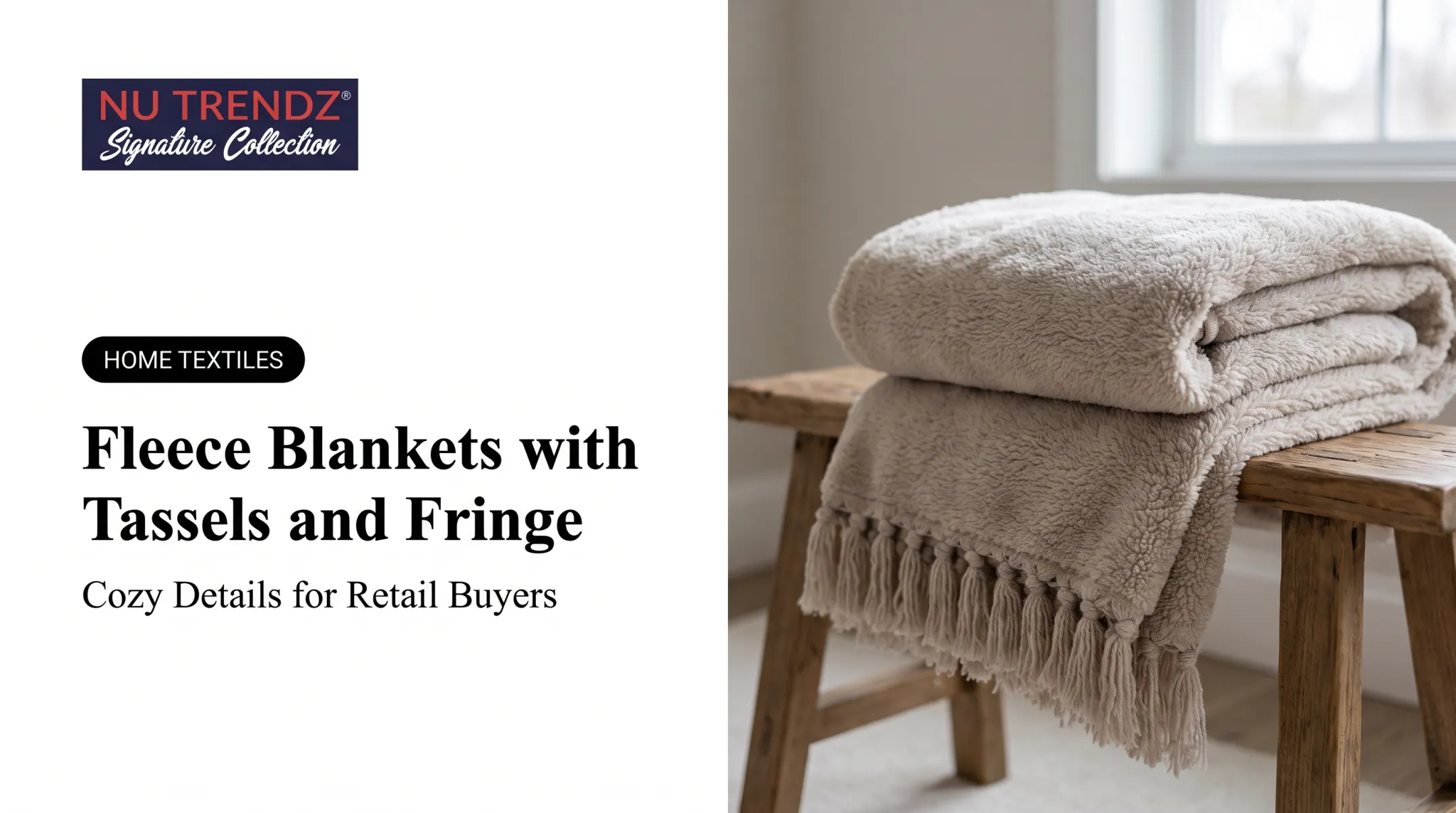

A single layer version solves both problems. You use one panel of fleece, cut a clean fringe or braided edge, and skip the bulky double-knot altogether. It's faster, uses roughly half the fabric, and still holds up through regular washing.
This guide covers three no-sew edge finishes — classic fringe, faux-braided, and the fringe-flip technique — plus how to pick the right fleece and cut it correctly the first time.
Key Takeaways
- Single layer blankets use less fabric and skip the bulky knots of double-layer tie blankets
- Three no-sew edge options: classic fringe, faux-braided, and fringe-flip
- Anti-Pill fleece holds up better than Blizzard fleece for long-term softness
- All you need is fabric, scissors, a ruler, and a flat surface — no sewing machine required
What You'll Need: Materials and Fleece Selection
Before cutting anything, gather these basics:
- Single layer fleece (1-2 yards, depending on blanket size)
- Fabric scissors or a rotary cutter for cleaner strip cuts
- Cutting mat to protect your table and keep lines straight
- Ruler or straight edge for measuring fringe width
- Painter's tape to mark consistent cut lines
Anti-Pill vs. Blizzard Fleece
Both are typically 100% polyester and sold at a standard 58-60 inch width, but the labeling difference matters. Michaels' Anti-Pill fleece listing calls out pilling resistance, softness, and machine washability. Blizzard fleece is sold as durable and easy to handle, without the same anti-pilling claim.
Bottom line: if you want a blanket that stays smooth after repeated washing, choose Anti-Pill. Always check the specific product listing rather than assuming every "Blizzard" or "Anti-Pill" label performs identically.
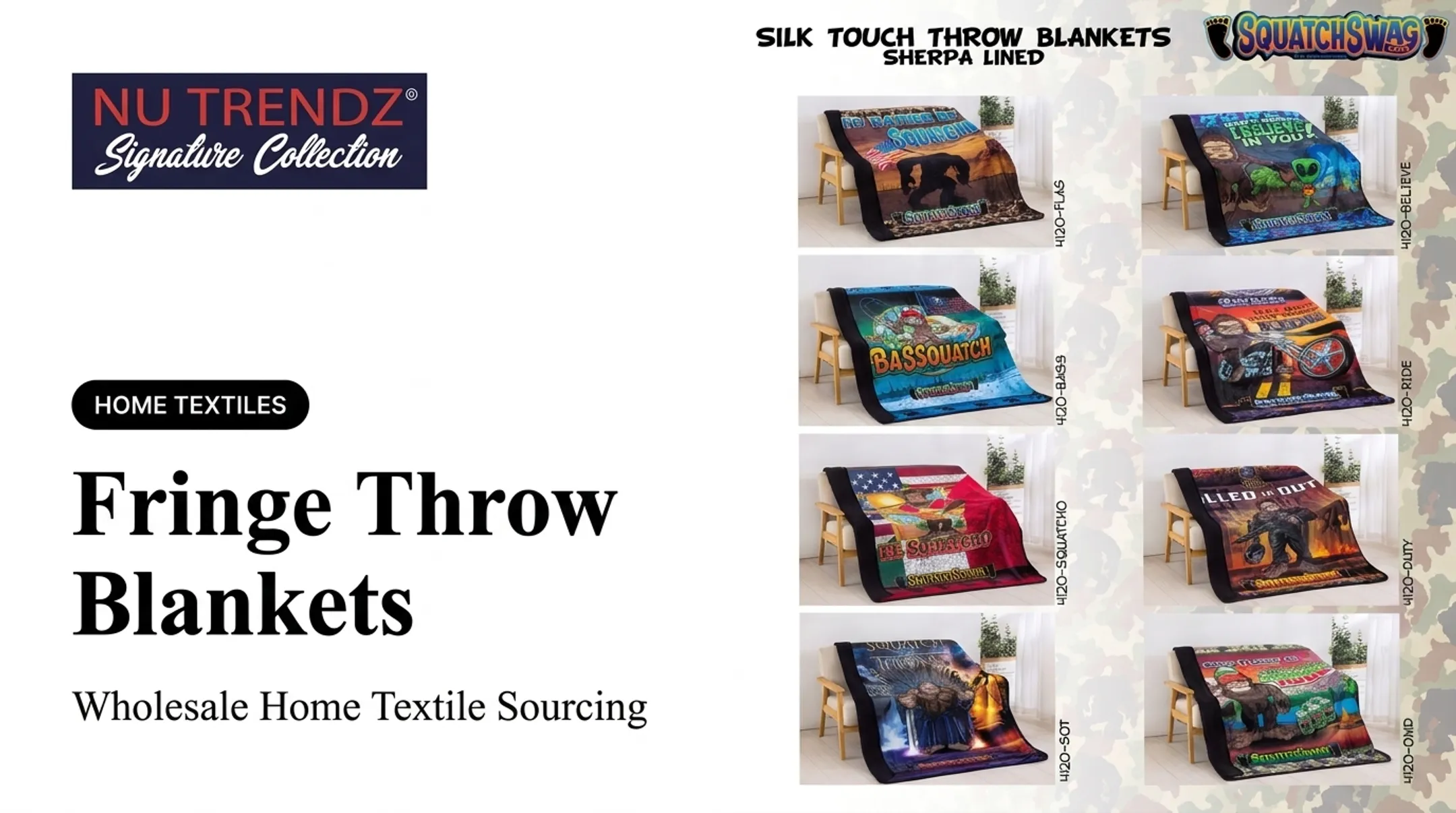
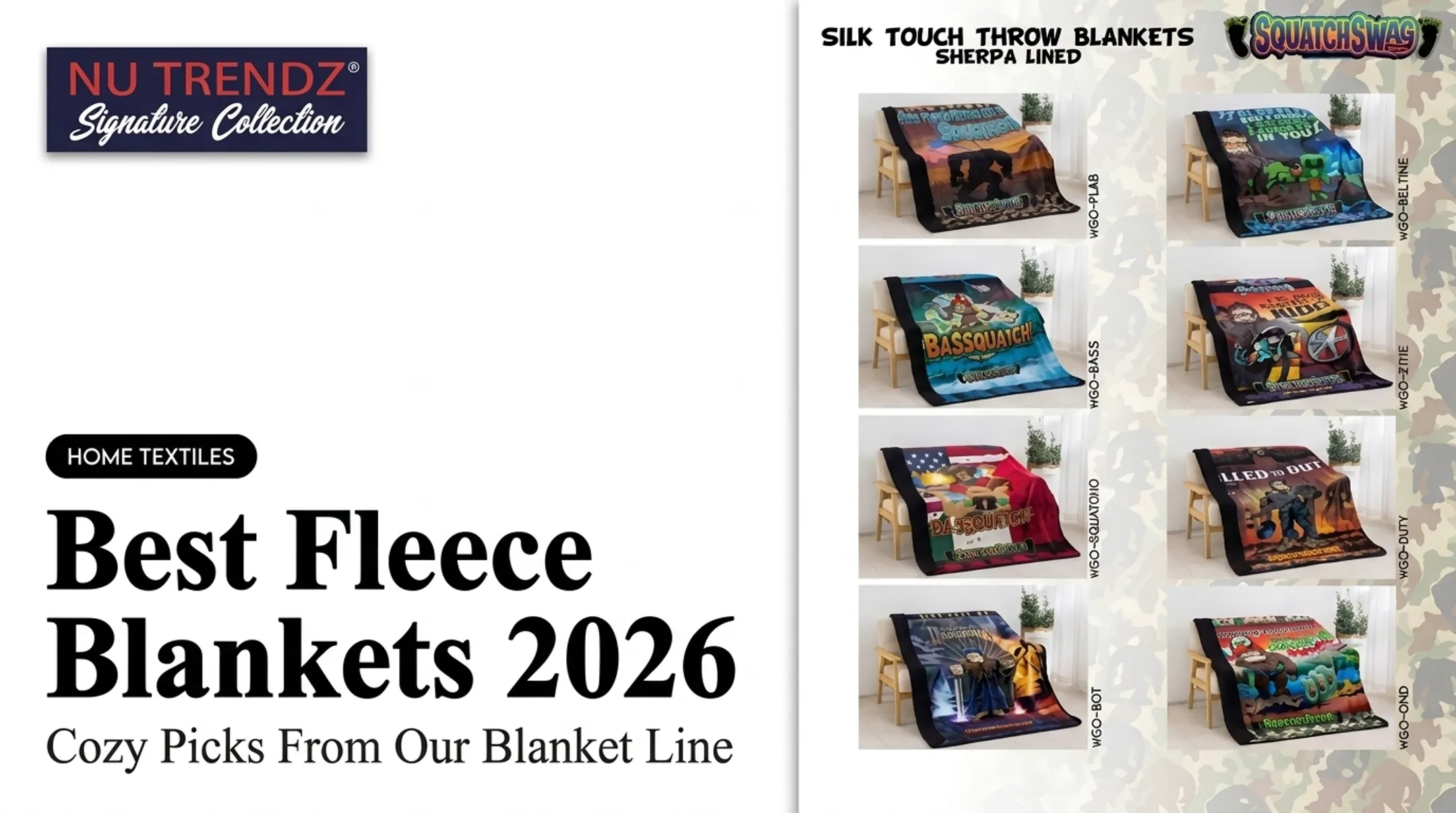
Prefer a finished gift over a DIY project? Silicon Valley Textiles carries pre-made Sherpa-lined throws in Native Heritage patterns, licensed NFL and soccer designs, and Bigfoot/Sasquatch novelty prints.
Choosing Your Blanket Size
Fleece yardage guidelines vary by project size. Based on a standard 58-60 inch bolt width:
| Size | Yardage | Approximate raw panel |
|---|---|---|
| Baby/lap | 1 yard | 36 x 58-60 inches |
| Child/throw | 1.5 yards | 54 x 58-60 inches |
| Adult/large throw | 2 yards | 72 x 58-60 inches |
The 1.5-yard child/throw size is the default single-layer project for most makers—it fits kids and everyday couch throws without much leftover fabric. Treat baby and adult yardages as planning starting points only.
Always measure your panel after cutting corners and fringe. Those cuts reduce your final dimensions.
Step-by-Step: Preparing Your Fleece Panel
Getting the base panel right sets up everything that follows.
- Lay the fleece flat on a large table or the floor, smoothing out wrinkles.
- Trim the selvage edges: the tightly woven factory edge won't fray evenly like the rest of the fabric.
- Square up the corners using a ruler so all four sides form clean right angles.
- Cut a small square from each corner (2 to 5 inches, depending on how deep you want your fringe).
Use painter's tape or a cardboard template to mark consistent fringe width along all four edges before you start cutting. This one step prevents the uneven, jagged look that trips up most beginners.

Method 1: Classic Fringe Edge
This is the fastest of the three methods and the best starting point if you've never made a no-sew blanket before.
How to do it:
- Cut fringe strips 1 to 1.5 inches wide and 2 to 5 inches deep along all four sides
- Tie each strip in a single or double overhand knot, working your way around the blanket
For a more relaxed, boho look, skip the knots and leave the fringe trimmed.
The trade-off: knots add a bit of bulk underneath. If you're making a blanket for a crib or anywhere kids will lie on the edge, that texture can bother them. Not a dealbreaker—just worth knowing before you start.

Method 2: Faux-Braided No-Knot Edge
If you want a smoother finish without deep fringe eating into the blanket, this method gives you a clean chain-link edge.
Steps:
- Cut shorter fringe strips, about 1 inch, with a small notch or slit near the base of each one.
- Using a paperclip, crochet hook, or safety pin, loop each fringe piece through the slit of the one before it.
- Continue around the entire perimeter, creating a chain-link effect.
- Finish the last loop by tying a small knot underneath to lock the braid in place.
The linked fringe skips the repeated bumpy knots of the classic approach. Shorter strips also leave more usable blanket surface.

Method 3: Fringe-Flip (Notch and Pull) Technique
This is the simplest method for kids or first-time crafters since it requires zero tying.
- Cut a small notch in the center of each fringe strip
- Flip each strip through its own notch, pulling it through to create a twisted look
- Repeat around the entire edge
The finished look is decorative and slightly twisted, similar to a rope trim. Since there's no knot-tying involved, this method is one that a 7- or 8-year-old can handle with supervision.

Tips, Troubleshooting, and Care
Quick fixes, wash guidance, and a simple gift idea so your single-layer no-sew fleece blanket holds up and feels finished.
Handling uneven corner fringe: Corner pieces often end up narrower than the rest because of how the corner squares are cut. If a corner strip looks too thin to knot or braid securely, trim it slightly shorter and tuck it into the neighboring strip's knot for stability.
Washing and drying:
- Wash in cold water with a mild detergent
- Skip fabric softener — it breaks down the fleece's loft over time
- Avoid washing with zippers, Velcro, or anything abrasive
- Air dry or hang dry when possible; if using a dryer, choose the lowest heat setting
This care approach follows common fleece manufacturer guidance and Columbia's recommendations for washing fleece: gentle cycles and low heat help limit pilling.
Gift pairing: A handmade blanket works as a standalone present. Bundle it with a small themed accessory for a ready gift set. Silicon Valley Textiles carries Sasquatch-themed baseball caps, mugs, and custom-printed drinkware that pair cleanly with a DIY blanket for birthdays or holidays.
Frequently Asked Questions
Where can I buy single-size fleece blankets?
Silicon Valley Textiles offers ready-made themed and licensed throw blankets in single sizes for fans and home use. If you prefer a DIY project, craft stores like Jo-Ann and Michaels sell raw fleece yardage.
What is the best single fleece blanket to buy?
Anti-Pill fleece offers the best combination of softness and long-term durability for single layer, no-sew projects. It resists the surface pilling that develops on lower-grade fleece after repeated washing.
Can I make a single layer no-sew blanket with two pieces of fleece instead of one?
Yes. Stack both pieces and treat them as one panel when cutting fringe and tying or braiding. You get extra weight and warmth, though the result is no longer a true single-layer blanket.
How much fleece do I need for a single layer no-sew blanket?
Using standard 58–60 inch wide fleece, plan on:
- 1 yard for a baby or lap blanket
- 1.5 yards for a child-size throw
- 2 yards for an adult-size blanket
Will the fringe or braided edge come undone in the wash?
Properly tied knots and locked braids hold up well through regular machine washing. Use cold water and a gentle cycle, and check knots periodically for the first few washes.
What tools make cutting fringe easier?
A rotary cutter paired with a cutting mat gives the cleanest, most consistent strips. Cardboard templates also help keep fringe width uniform across all four edges.