
If you've been shopping for one, you've probably run into a mix of names: fringe throw, tassel blanket, fringed throw. Are these the same thing? Mostly, but the construction behind the edge can differ quite a bit. You may also be wondering if fringe is purely decorative or if it holds up to actual daily use.
This guide breaks down the fringe types, materials, and design choices you'll encounter, plus how to pick, style, and care for one without ruining the edge in the wash.
Key Takeaways
- Fringe, tassel, and fringed throw labels often overlap, but edge construction still varies by manufacturer.
- Your best pick depends on material, use case, fringe length, and how much maintenance you're willing to do.
- Styles run from subtle tone-on-tone to bold contrast, so the same throw can suit a minimalist room or fan-cave sports decor.
- Always check the care label and inspect fringe attachment before your first wash.
What Is a Fringe Throw Blanket?
A throw blanket is smaller than a bed blanket and built for casual use: draped on a sofa, folded over a chair, tucked in a suitcase for travel, or wrapped up as a gift. Fringe is the finishing detail added along one or more edges, typically made from loose threads, yarn, or fabric strips.
Fringe vs. Tassels vs. Decorative Edging
These terms get used loosely, but they're not identical:
- Fringe — a border of hanging threads along an edge, generally uniform in spacing and length
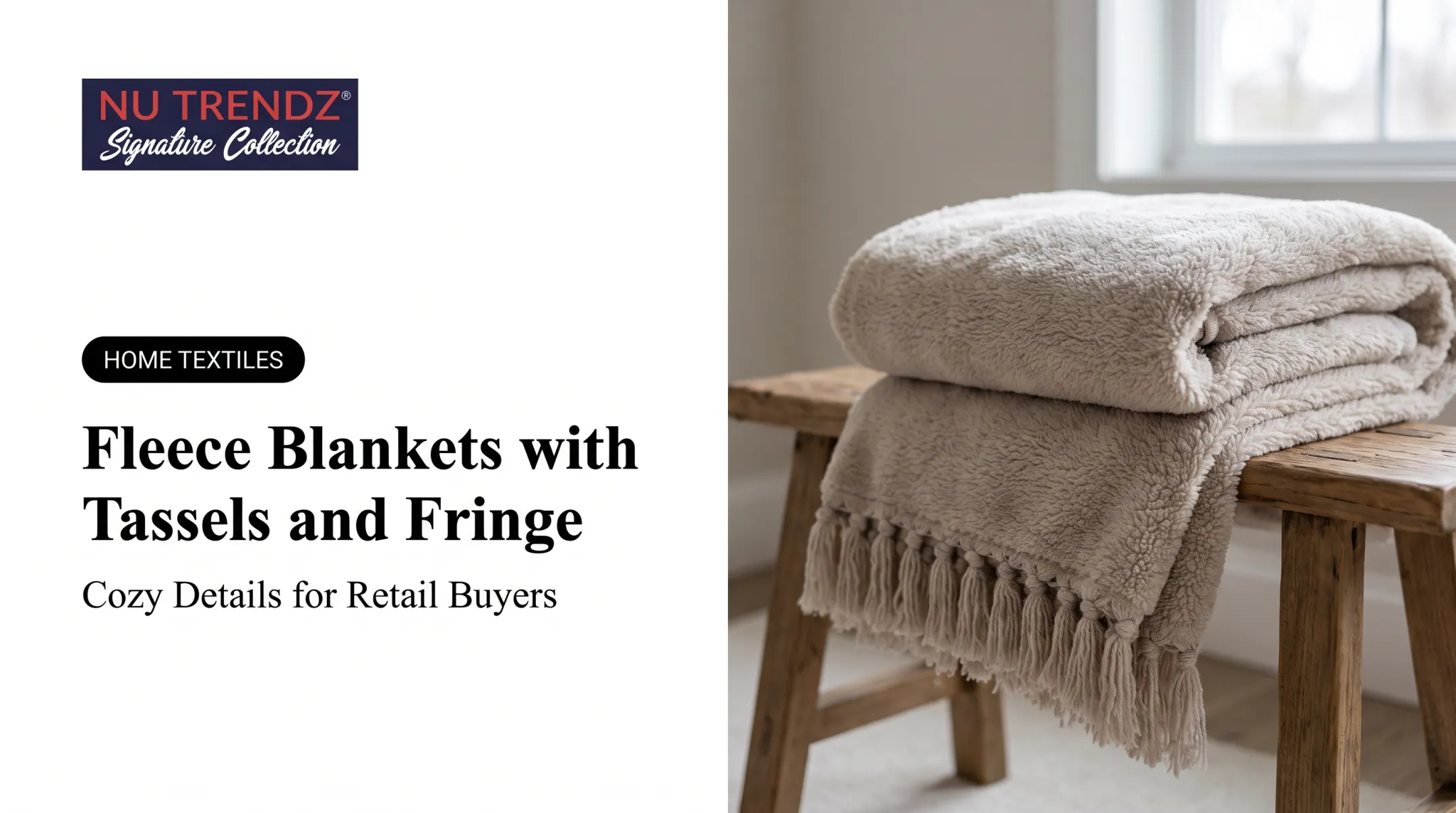
- Tassels — grouped strands bundled and fastened at one end, creating a thicker, more sculptural accent than standard fringe
- Decorative edging — a catch-all term retailers use for either style, or a combination of both
Britannica's definition of fringe describes it simply as a border of hanging threads used to decorate an edge — a useful baseline, since not every "fringed" product uses the same construction method. That difference usually comes down to how the fringe is made.
Woven-In vs. Attached Fringe
Some fringe is woven directly into the blanket's construction, meaning the loose threads are literally the continuation of the fabric's warp yarns. Pendleton, for example, sells a wool throw with what it calls "self-fringe" — a 3-inch fringe that's part of the original weave rather than something stitched on afterward.
Other fringe is added post-production: yarn, fabric strips, or twisted cord attached along a finished hem. This method opens up more design options, including contrasting colors, tassel clusters, and braided strands.
The tradeoff is an extra attachment point that can loosen over time if it isn't sewn or knotted securely.

Why Fringe Matters Beyond Looks
Fringe isn't purely decorative. It also:
- Finishes a raw or cut edge cleanly
- Adds movement and tactile texture
- Frames a printed or woven pattern, drawing the eye toward the center design
- Signals a more handcrafted or premium feel compared to a simple hemmed border
Placement changes the effect, too. Fringe on just two ends gives a classic, draped look when the throw hangs over furniture.
Fringe on all four sides creates a fuller decorative border, though it also means more edge to maintain and more surface that can tangle in storage or the wash.
Fringe Styles, Materials, and Designs
Not all fringe looks or behaves the same. The construction method changes both the visual weight and how the blanket handles daily wear.
Common Fringe Constructions
| Construction | Look and Feel |
|---|---|
| Loose straight strands | Simple, casual, moves freely |
| Grouped tassels | Thicker, more structured, bold visual accent |
| Twisted or braided fringe | More texture, holds shape better than loose strands |
| Knotted fringe | Secure ends, less prone to fraying |
| No-sew cut fringe | Budget-friendly, but edges may fray with repeated washing |
Pottery Barn's Herringbone Twisted Tassel Throw is one real-world example of the twisted-tassel category, while The Citizenry's La Brisa throw uses a 5-inch hand-knotted fringe on a 100% alpaca body. Check the product details for construction type before you buy—loose strands, tassels, and knotted edges wear differently.
Material Considerations
Blanket material affects softness, warmth, drape, and how the fringe itself holds up:
- Cotton — breathable and easy to care for, low-maintenance choice for fringe edges
- Wool — warm and durable, though self-fringed wool throws (like Pendleton's) often carry specific wash instructions rather than generic care
- Acrylic — lightweight and often budget-friendly, common in blend fabrics used for fringed accent throws
- Fleece — soft and warm, though fringe isn't as common on true fleece since the fabric doesn't fray into clean strands the way woven fabrics do
- Blends — combine properties of multiple fibers; check the sewn-in label for exact percentages rather than assuming based on the outer feel
Always verify material claims against the specific product's label. A "wool-look" throw isn't necessarily wool, and fringe behavior can differ even within the same fiber family depending on how tightly it's spun.
Matching vs. Contrasting Fringe
Matching (tone-on-tone) fringe keeps the look restrained and coordinated — a good fit for minimalist or neutral rooms. Contrasting fringe does more visual work: it can outline a border, tie into a room's accent color, or reinforce a themed design.
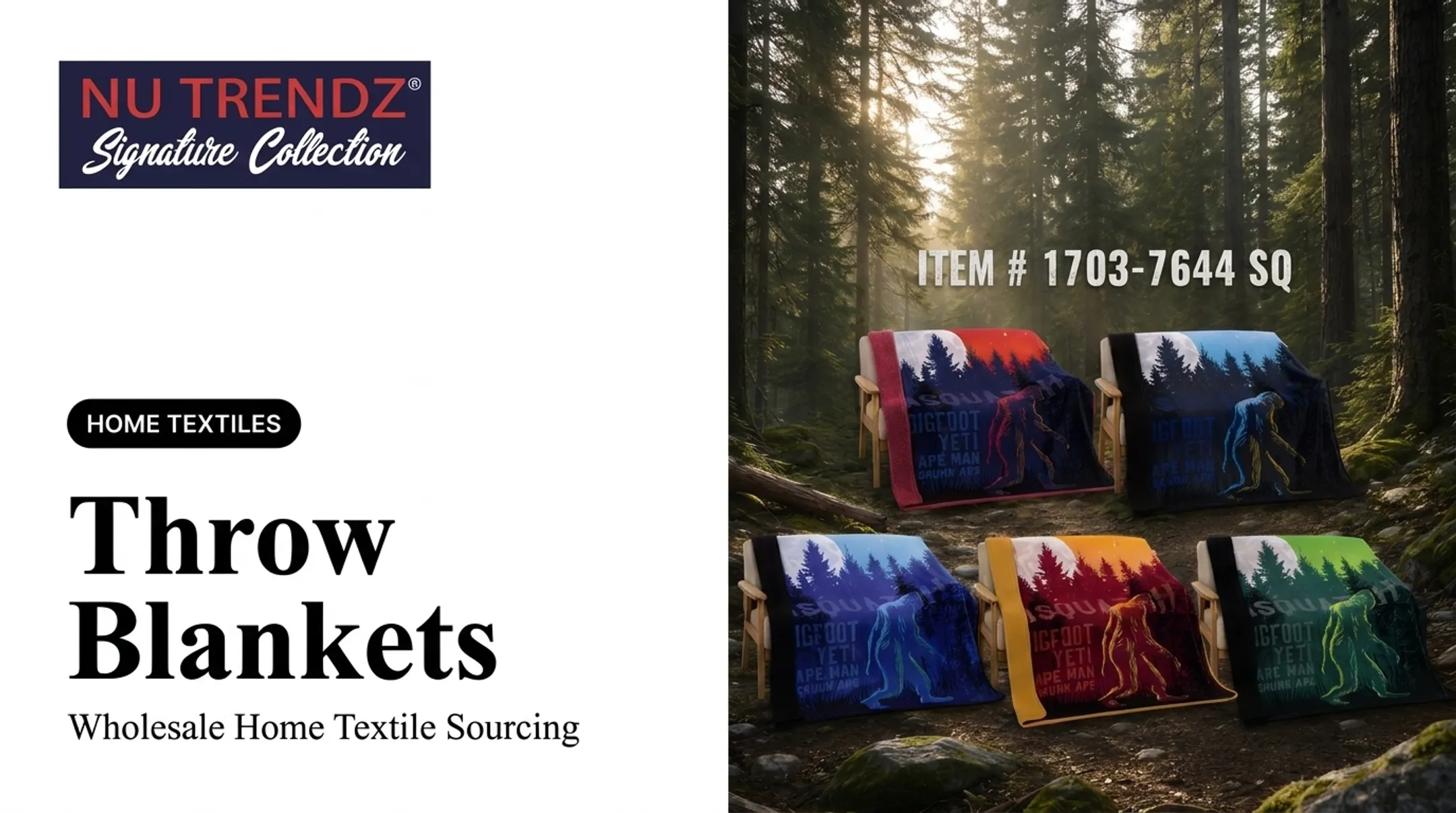
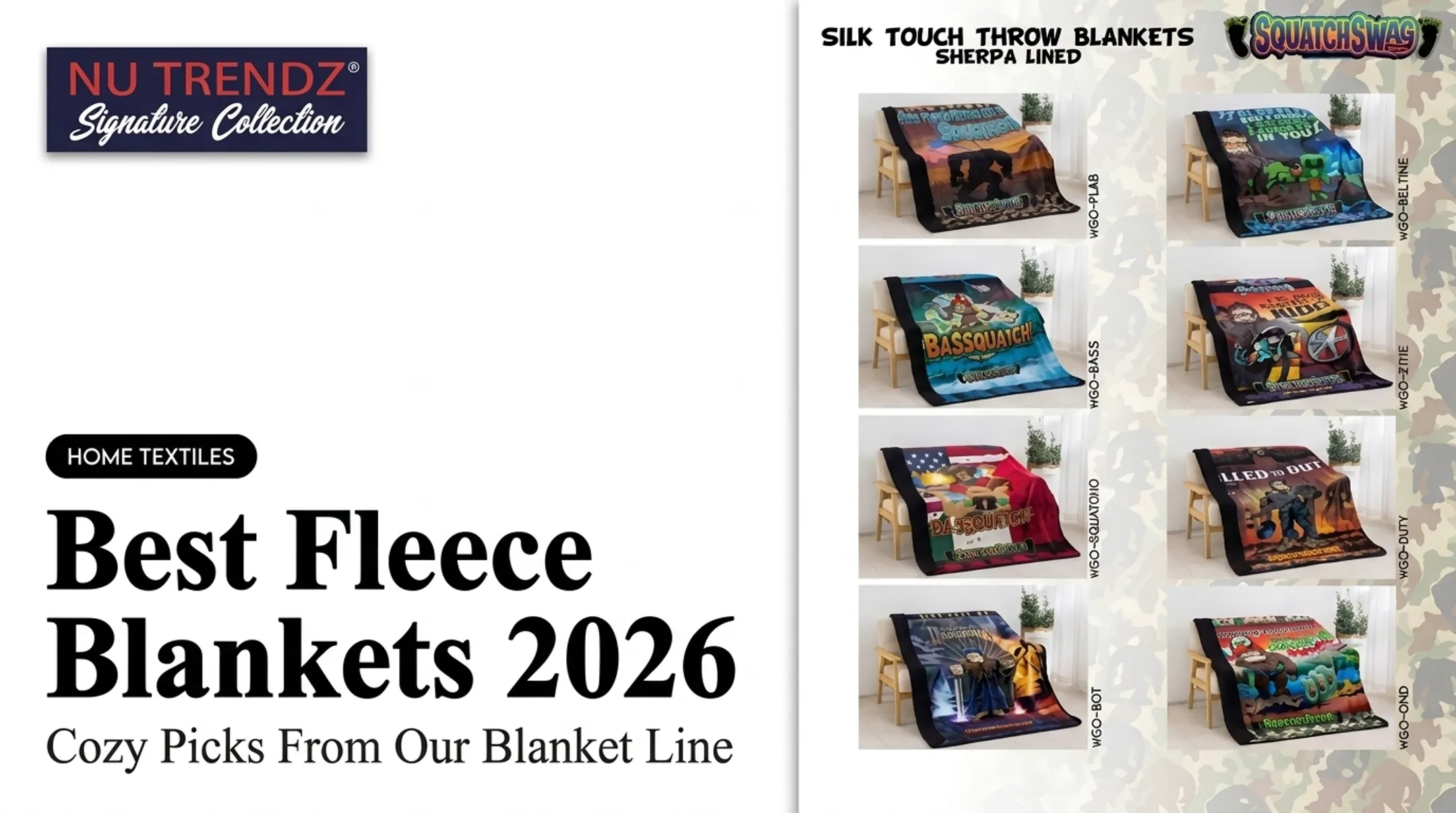
A neutral, matching-fringe throw disappears into a modern living room. Bold contrasting fringe on a themed blanket—a soccer crest, patriotic print, or Bigfoot/Sasquatch graphic—does the opposite and becomes the focal point in a fan room or game-day setup. Silicon Valley Textiles carries themed collections across sports, Native Heritage patterns, patriotic artwork, and novelty designs like its Sasquatch-focused lines.
Fringe length and density also shape the overall balance. Short, neat fringe reads as understated; longer fringe reads as more dramatic and statement-making. Match length to the blanket's scale and the room: short fringe for quiet layers, longer fringe when you want the edge to lead.

How to Choose the Right Fringe Throw Blanket
Picking the right one starts with how you'll actually use it.
Match Fringe to Intended Use
- Occasional decor — prioritize appearance; delicate or longer fringe is fine since handling is minimal
- Daily sofa or bed use — choose secure fringe attachment and easy-care fabric; frequent folding stresses the edge
- Travel — pick compact, low-maintenance materials; long fringe can snag in luggage
- Gifting — themed or personalized designs tend to land better than generic patterns
- Kids' spaces — shorter, securely attached fringe reduces tangling and pulling risk
- Display-focused rooms — fringe length and drama matter more than durability
Size and Proportion
Match the throw to your furniture. A standard-size throw runs around 50 x 60 inches, though this varies by brand and style. Consider:
- Whether the blanket needs to cover a lap or drape decoratively over a sofa arm
- Whether the fringe adds length beyond the blanket body (some listings measure fringe separately)
- Whether enough border stays visible so the fringe reads as design, not a bunched fold
Quality Checklist
Before buying, check for:
- Even strand length across the entire edge
- Secure attachment — tug gently to see if strands pull loose
- Consistent spacing between strands or tassel groups
- Clean finishing at the base where fringe meets the body
- Minimal loose fibers shedding from the edge
- No puckering — the edge should lie flat, not distort the blanket's shape
Color, Design, and Custom Options
Think about your room's existing palette, how much contrast you want, and whether the blanket should blend in or stand out. For personalized gifts, fan merchandise, or branded textiles, a custom fringe throw often makes more sense than a generic design.
For that kind of order, Silicon Valley Textiles handles in-house custom printing and embroidery on its own blank stock. It also offers licensed sports blankets (NFL, MLB, FIFA) and themed collections spanning Native Heritage patterns, patriotic US250 artwork, and novelty designs.
If you're sourcing personalized or branded fringe throws, confirm fringe style and specs with the supplier before ordering. Not every blank or program supports the same edge treatment.
Styling and Care Tips
Styling Ideas
A few low-effort ways to use fringe throws:
- Drape it diagonally over a sofa arm so the fringe hangs visibly
- Fold it in thirds at the foot of a bed for a hotel-style layer
- Layer it over a reading chair alongside a smaller accent pillow
- Hang it on a rack or hook in a fan room so the fringe frames artwork instead of covering it
Preventing Tangled or Crushed Fringe
- Fold or roll the blanket based on its material (rolling tends to prevent crease lines on heavier fabrics)
- Keep fringe strands aligned in the same direction before storing
- Avoid stacking heavy items directly on the fringed edge
- Follow the manufacturer's specific storage guidance when provided
Washing and Care
Always start with the sewn-in care label. It takes precedence over any general fiber advice. Under the FTC's Care Labeling Rule, manufacturers must attach permanent washing or dry-cleaning instructions, so that label is your most reliable source.
When machine washing is permitted, fringe-throw makers typically recommend a gentle cold cycle, a mesh laundry bag to limit tangling, and not hanging the throw by its fringe to dry.
That guidance never overrides a dry-clean-only label. Some hand-knotted or natural-fiber throws specifically require dry cleaning.
After washing, gently reshape and separate the fringe by hand while it's still damp. This keeps strands from drying stuck together or twisted out of alignment.

Frequently Asked Questions
What are the blankets with the tassels called?
They're commonly called fringe throw blankets, tassel blankets, or fringed throws. Names vary by construction and retailer, so check the product description for specifics.
What are the popular blankets right now?
Textured throws, patterned and themed designs, and personalized options stay popular alongside versatile neutrals. Trends shift by season and retailer, so no single style dominates.
How long should blanket fringe be?
It depends on the throw's scale, material, and intended look. Most range from about 3 inches for subtle self-fringe to 5 inches for a dramatic hand-knotted edge.
Are fringe throw blankets practical for everyday use?
Yes, when the material and attachment method suit frequent handling. Shorter, securely attached fringe generally holds up better daily than long or delicate strands, which need more careful maintenance.
How do you wash and care for a fringe throw blanket?
Follow the sewn-in care label first. If machine washing is approved, use a gentle cold cycle, a mesh bag to limit tangling, and reshape the fringe by hand once it's clean and still damp.